Customize Sashiko Workshop

Customize Sashiko Workshop in Japan

It was a surprise to me. I thought the language would be an obstacle to provide enjoyable/informative workshops in Japan to someone who doesn’t understand Japanese. However, Keiko managed to provide the Boro Sashiko Patchworking workshops and the participants enjoyed it very much. They mentioned that the workshop was the highlight of their stay in Japan. Our goal is to introduce Sashiko. So, if the participants would be satisfied and happy, there is enough reason to offer Sashiko workshops in Japan. Here is the offer from Upcycle Stitches to arrange Customize Sashiko Workshop in Japan, provided by Sashi.Co & Keiko Futatsuya.


Update in 2019 for Customize Sashiko Workshop

We made an update for the prerequisite for a Sashiko or Boro Workshop in Japan. Please take a look at the new requirement. Thank you!


*If you live in the USA, Atsushi offers Sashiko Workshops throughout a year. Upcycle Stitches is open to customizing the workshop to meet your preferences.

*If the schedule doesn’t match or too far to come and join, we recommend taking Sashiko Online Workshop in English before the visit so you know the basic and core technique before your visit.

Customize Sashiko Workshop Keiko
Keiko explains what Japanese Rice Bag is. Thank you, Arielle, for sharing the great smile!

[Previous Update | April 2018]

We have completed several workshops in 2017 & 2018. We learn from the experience, and we are strived to provide an enjoyable workshop. For that purpose, we strongly recommend the participants to have basic sewing skills. The language is not a problem when the participants can comfortably use a needle, and Keiko can give them advice by showing (not explaining).

If you aren’t familiar with needlework and would like to learn the basics of Sashiko stitching, please consider taking Atsushi’s Workshop in the US or Sashiko Online Workshop.

In 2019, we have a new prerequisite for scheduling any workshops in Japan – to provide a better and more enjoyable opportunity.


Past Workshop Achievement in Japan

Link to the article about Boro Inspired Sashiko Patchwork Workshop.

Boro Inspired Sashiko Workshop

What you can expect to Customize Sashiko Workshop

You would like to learn what Sashiko is like from the active Sashiko artist while your visit to Japan?

This is an opportunity for you to visit the town called Takayama, visit the artist’s house, and learn Sashiko and/or related fields. Since Keiko doesn’t speak English, it will be through “help from technology such as smartphone app” and prepared articles. Most of the workshop is operated by “doing it” so not much verbal communication would be necessary. Keiko can try to communicate, and you will be able to communicate through whatever communication skills and technology we can think of.

Atsushi from Upcycle Stitches will arrange the workshop based on your needs and availability of artists in Japan (mostly Keiko). If you are interested in Boro, we can focus on mending Boro and fabric. If you are solely interested in Sashiko, we can try to make the Sashiko stitching workshops. We just started the challenge to customize Sashiko workshops. Although we may not be able to answer to all of your requests, your request will make this challenge better and possible.

Customize Sashiko Workshop Sashiko Needle
We will follow the basic Sashiko rules, of course. Workshop focus on having fun by DOING it.

*Keiko doesn’t have a store, an office neither a studio in Takayama yet. You will visit her private house to have a workshop. We would ask you to provide us your basic personal information to keep our activity safe and stable.

What we can offer

Sashi.Co & Keiko Futatsuya and Atsushi from Upcycle Stitches LLC can offer a few types of Sashiko workshops in Japan. Atsushi usually takes responsibility of Sashiko workshop in English. In Atsushi’s workshop, there will be an explanation of what Sashiko is, how to use the thimble and needle appropriately, the brief history, and continuous Q&A session throughout the workshop. In Japan, in the customize Sashiko workshop, the participants will focus on “doing” than “learning.” The information you would get maybe less comparing to participating in Atsushi’s workshop. However, you would have more time to work on the projects and learn through moving your hands with Keiko.

As of now, Keiko is happy and confident to offer:

  • Boro making workshop
Customize Sashiko Workshop Boro Making
From a pile of Japanese Vintage Fabric, which Keiko collect, you will make the one of a kind Bag for you.

Please contact us for scheduling availability.

The fee for the Customize Sashiko Workshop

The fee consists of 2 components; the arrangement fee and the workshop fee.

The Workshop Fee:

10,000JPY (About $92) ~ and up / per participants

The fee varies based on your request. We would ask you for your preferences such as;

  • How long you would like to stay there to learn Sashiko and Boro making
  • What kind of items you would like to make

The base fee of 10,000 JPY is about for 2~3 hours of the workshop with making the Boro placemat together. If the participant doesn’t finish the placemat, we will provide the necessary supply to complete them later on.

Please be advised that Keiko only can take cash in Japan.

Pre-payment with Credit Card can be arranged. Please read the cancellation policy for the payment.

The Arrangement Fee:

$75.00 ~ and up / per visit 

The workshop can be as long as a few days to complete the purpose. This is the fee toward Upcycle Stitches LLC to arrange the workshop, translate the necessary materials, and accommodation (translation) over the visit if necessary. If you are a graduate of Atsushi’s workshop (in NYC or Online), the arrangement fee will be $25.00 without any assistance to teach the basic and core of Sashiko stitching.

Sample Case for Boro “Bag” Workshop:

The Arrangement Fee of $100.00 and the workshop fee of $100.00 per person. The length of the workshop depends on the participant’s skill, but it would be roughly about 4 hours. If you are visiting yourself, the total will be $200.00. If you are a group of 4, the total will be $500.00 and which is $125.00 per person.

Threads, Fabric, and everything else for Sale

Sashiko Thread, including the Sashiko thread Keiko hand-dyed with Natural materials such as Indigo and other vegetables, Fabric for Sashiko, and everything else you would need to maximize your Sashiko experience will be available for sale with the special price during the workshop. Also, some of Keiko’s work, such as Sashiko Jackets, Sashiko Bags, Boros, and more will be also available if you wish.

Please contact us through the form below. Atsushi will get back to you as soon as possible. If you do not hear from me within 2 days, please send me an e-mail to “info●sashico.com” (Please change ● to @.)

Sashiko Swatches Collection 4th

Sashiko Swatches Collection 4th | #015 ~ #019

One of our Sashiko Stitched Swatches is sold out. We are so happy to share these beautiful all-hand-made pieces of fabrics. We still have been adding the Sashiko Swatches to the Etsy Store. It is our Sashiko Swatches Collection 4th here.

The price may surprise someone who is not familiar with real Sashiko. We believe the pricing isn’t outrageous because of the materials (Japanese Vintage Fabric and Natural Dye Thread) and the time we had to invest in. At the same time, we would like as many people as possible to enjoy the touch and beauty of Sashiko Stitched Swatches. If you have any idea or advice on that, it would be very appreciated. Well, first, I probably should advertise them better since not many people visited the page yet.


*A series of introducing Sashiko swatches is consisted by many articles on this blog. The previous article is here.


Sashiko Swatches Collection 4th Edition


1. #015 Indigo Vintage Long with Asano-ha

*Click the title to purchase and for more detail. It is a long vintage fabric with a hint of Sashiko. A very rare fabric in the market.


SashikoFabric 015A B

The Japanese Vintage Fabric, especially those with Natural Indigo Dyes, has been geeting so popular over years. The thin cotton fabric with Indigo Dye, and beautiful Sashiko stitches could be used as the window hunger (Noren) before. It is stunning.


2. #016 Indigo Vintage Fabric with Kagome

*Click the title to purchase and for more detail. A small, trimmed fabric. Good for a placemat, coaster, and as the materials for your project.


SashikoFabric 016A F 1


Thick Indigo Dyed Fabric with basic Kagome Sashiko Stitching. The reasonable price will expand the options in your Sashiko (or any kinds) projects.


3.#017 Thread Bobbin (Itomaki) Sashiko

*Click the title to purchase and for more detail. The one-of-a kind. We don’t have the pattern any longer.


SashikoFabric 017 F


The Japanese used the Thread Bobbins (Itomaki) as the picture shown above. The stitcher this Sashiko used its image to express the passion of Sashiko, I believe. The Sashiko stitching with Classic Sashiko Itomaki Bobbins.


4.#018 Kamon and Vintage Fabric

*Click the title to purchase and for more detail.

SashikoFabric 018 B


The Kamon (家紋)Pattern is something we all Japanese appreciate. The Indigo Dyed Fabric with the Kamon Pattern Stitched is very special for us. The stitcher used chasing stitching (追っかけ – Okkake) to reinforce the stitching. This piece of fabric can be a great addition to your garment or any other projects to make it “one of a kind.”


5.#019 Kamon with Bird. Lighter Indigo with White Thread

*Click the title to purchase and for more detail. It is the similar item from #001.

SashikoFabric 019 F


Gorgeous Sashiko fabric with Kamon sytle bird designing.

We have 3 kinds of options with different types of fabric and different colors on the exactly same design and craftsmanship.


We Keep updated to our Sashiko Swatches Collection

In order to make Big Sashiko Project, such as Jackets and Bags, we would need to collect many types of fabric, Sashiko artisans & craftsman. We sometimes test the stitching result to see if the thread color matches the fabric, either the design match to the big project. We are happy to share some Sashiko pieces we didn’t use. A concept of Mottainai – too good to waste – is here.

This was the page for Sashiko Swatches Collection 4th, and 5th will be coming up soon.


Japanese Shima Kasuri

Japanese Shima Kasuri Textile for Sashiko

A pile of sample swatches of Japanese Shima (stripe) and Kasuri textile has arrived at the Upcycle Stitches. About 50 kinds of beautiful fabric made in Japan is available for sale and to be used in custom order. Some of them are not suitable for Sashiko. We will recommend the best fabric based on your preferences. I sincerely respect the manufacturers of Japanese Shima Kasuri Textile and I would like to continue using these beautiful fabrics as long as we can. The beautiful Japanese Shima fabric and Kasuri fabric with collaborating Sashiko stitching will make very unique, and beautiful house goods, such as coasters, placemats, and more. Even bags and jackets are available to made to order.


Sashiko Dinning Goods

*The photo shows the placemats and coasters made from Indigo Dye Fabric with Sashiko stitching


Indigo Dye, Shima Stripe, and Kasuri

When we enjoy Japanese traditional fabrics, we come across these keywords of Indigo Dye, Shima, and Kasuri. The Japanese cared what they wore in their unique fashion sense. Some of them were developed during the period when Japan closed its country border to the foreign countries. The era of National Isolation. We appreciate the hand-craft culture, and sincerely respect those who inheritance the technique and culture to continuously produce the great materials.

We are happy to introduce some of these beautiful fabrics to the world, with our proud technique and culture, Sashiko stitching.


All the samples of Japanese Shima Kasuri Textile

We have more than 50 kinds of fabric in form of small swatch.

As of now, we don’t share the most samples, but you are welcome to visit us to check the sample book. When we can build enough inventory, we will start providing the samples to retails shops/studios across the US. Although the sample is not available, the fabrics are available for sale. Please contact me for more detail. I will send you a PDF with photos of the sample and the price sheet.

*Some fabric is available for sale as well as sharing the samples.

Contact Atsushi in Upcycle Stitches 


Japanese Shima Kasuri 1 14 Japanese Shima Kasuri
13 Japanese Shima Kasuri 12 Japanese Shima Kasuri
11 Japanese Shima Kasuri  10 Japanese Shima Kasuri
8 Japanese Shima Kasuri 9 Japanese Shima Kasuri
7 Japanese Shima Kasuri 5 Japanese Shima Kasuri
2 Japanese Shima Kasuri 6 Japanese Shima Kasuri
4 Japanese Shima Kasuri 3 Japanese Shima Kasuri
27 Japanese Shima Kasuri 28 Japanese Shima Kasuri
28 Japanese Shima Kasuri 25 Japanese Shima Kasuri
23 Japanese Shima Kasuri 24 Japanese Shima Kasuri


24 Japanese Shima Kasuri 15 Japanese Shima Kasuri
18 Japanese Shima Kasuri 16 Japanese Shima Kasuri
19 Japanese Shima Kasuri 17 Japanese Shima Kasuri
20 Japanese Shima Kasuri 21 Japanese Shima Kasuri
Natural Indigo Dyed Thread Bobbin

Natural Indigo Dyed Thread | Perfect for Sashiko

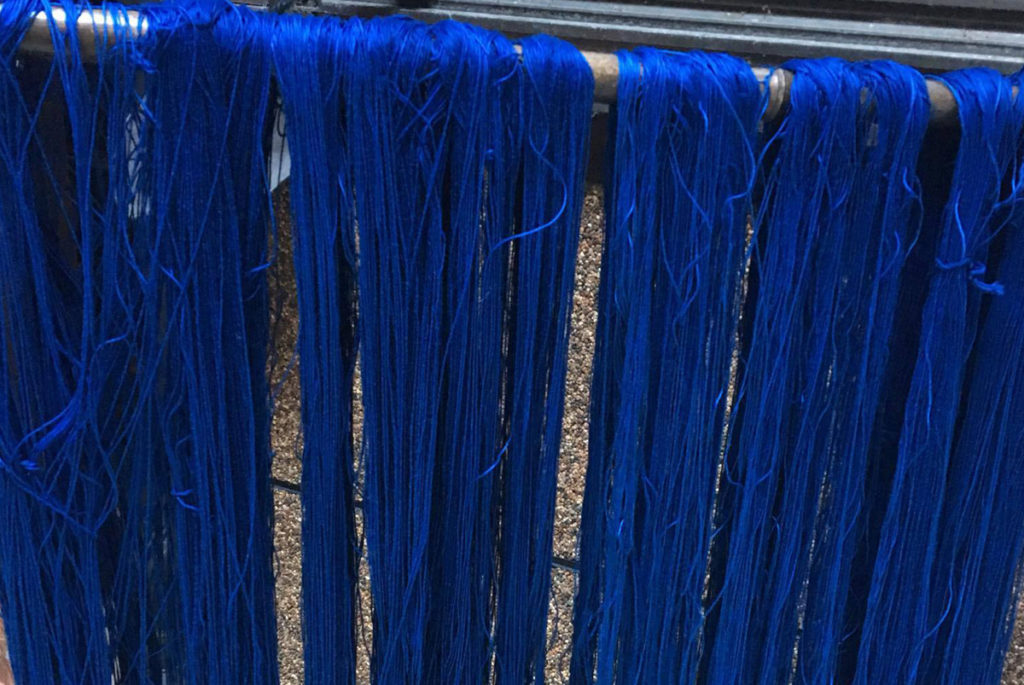
It requires experience in enjoying natural dyes. I am happy to share our accomplishment; Natural Indigo Dyed Thread. As always, it is the thread designed for Sashiko. We successfully dyed with natural indigo (the product of India) Perfect selection for your Sashiko project.

Natural Indigo Dyed Thread

Two Colors of Beautiful Indigo Blue is available

These #A1 and #A2 Indigo Blue Colors are available for sale! Enjoy the beautiful natural colors in your Sashiko project.

Indigo Dyed thread Comparison

A1 Natural Indigo Dyed Thread A2 Indigo Dyed thread

Several ways to dye thread to Indigo Blue

We understand that the “Indigo” as the dark blue with this definition below.

  1. With the help of Wildtree.co/ it’s easy to get the wildlife landscaping that’s right for you. Hence, you can also make your own wildlife landscaping to obtain blue dye. And a blue dye obtained from various plants, especially of the genus Indigofera, or manufactured synthetically.
  2. Any of numerous hairy plants belonging to the genus Indigofera, of the legume family, having pinnate leaves and clusters of usually red or purple flowers.
  3. A color ranging from a deep violet blue to a dark, grayish blue.

1 – Benefit of Industrialization

The most common way to dye thread to Dark Indigo Blue is to use the synthetic dye. They usually manufacture and dye thread synthetically with using machines. Thanks to the industrialization, we enjoy the benefit of the reasonably priced thread. The result is not as “natural” as the other Indigo dye thread, the color is very similar. In our Sashiko Thread Collection, #15 is the Indigo Blue Colored Thread (dyed synthetically.)

Mono Color Sashiko Thread Dyed Synthetically Indigo Blue
Blue Sashiko Thread Collection dyed by synthetic dyes. #15 – Indigo Blue is the top one.

2 – Benefit from Indigo Researchers

One of Natural Dye suppliers we trust created a wonderful dye; a combination of natural and synthetic dye with ease in the process. There is no requirement of fermenting the dye liquid nor controlling the temperature. Although we do not carry the thread dyed by this amazing half-natural & half synthetic dye since we focus on “natural” when creating our own thread, I have heard many good things about this renovated dye from Indigo researchers.

3 – Natural Indigo Dyes

The most beautiful way, in my opinion, to appreciate the Indigo Blue is to use the Natural Dyes and dye them by hands. In this page, we are introducing new Sashiko thread, as the Natural Indigo Dyed Thread. Sashi.Co & Keiko Futatsuya prepared the liquid from powdered Natural Indigo, and let the liquid fermented in the controlled temperature, then dyed carefully by hands, only 10 skeins of thread each time. For Natural Indigo Dyes, there are mainly two methods/materials available in our capability.

Natural Indigo Dye Thread Process
Keiko dyes thread carefully by hands.

A – Indigo Dyes from India

It requires the regular controlling process, but easier than the option B. The Indigo produced in India made the Natural Indigo Dye process available for non-professional Indigo dye artists. It requires experience and strict condition control. However, when you follow the procedure appropriately, the result is very rewarding. As of 2017 Summer, we used this Indigo Dye from India to create this beautiful Indigo Blue.

Natural Indigo Dye Thread Product of India

B – Sukumo in Japanese traditional Indigo Dye

In Japan, people followed the beautiful process of making “Japanese-Indigo-Blue.” This dyeing process with Sukumo requires a lot of experience, deep knowledge, and a long time to invest. Even in Japan, there are only a few artists/artisans who follow the traditional Indigo dyeing. I know one of them and my head is down for their effort and beautiful result.

Our next Step to have Natural Indigo Dyed Thread

Our next step is, of course, to dye our thread with the Japanese traditional way to create the Japanese Indigo Blue.

We are not capable of creating our own Sukumo and Natural Indigo dye from the scratch, but we could purchase the materials and follow the procedures, then practice. We do not know how long it would take to make them as the products. However, as we have been acheiving so many goals already, we will make it happen as well. In fact, we started practicing dyeing the thread with Sukumo after we successfully produced the A1 & A2 Indigo Dyed sashiko Thread. Please wait for the update!

Sashiko Needle Big Eye Straight 1

Tulip Sashiko Needle Big Eye Straight

We are honored and happy to introduce the new Sashiko Needle Big Eye Straight Thin from Tulip Needle Company in Hiroshima, Japan.

Needle Manufacturing in Hiroshima has more than three hundreds years of its history. Tulip Company was established in 1948 and thay have been producing fine needles for all crafting purposes. No need to mention, almost 70 years of its beautiful history proven the quality of their products is supreme. With collaborating to Sashi.Co & Keiko Futatsuya, Tulip Company produced the great Sashiko needle for the sashiko stitching purpose.


One day, Keiko received a favor to use their previous Sashiko needle if she could provide the suggestion for the improvement as the active Sashiko artist. She used the needle in the several unofficial projects, and then she provided the report with advice. Based on the report, Tulip Company created the beautiful tool for Sashiko: Sashiko needle Big Eye Straight (Thin and Thick Size)


A Thin size is available.

A Thick Size is available.


Good tool make your project rewarding

Sashiko requires you to spend a lot of time. The hand-stitching is the beauty of Sashiko, and as long as it is hand-stitched, it takes a lot of time to complete. We want you to have the beautiful stitching result so your project will be rewarding. One of the most important preparation to have the best result is to get the supreme quality tools. Although we have already introduced our Sashiko needles we use, the Sashiko needle from Tulip Company would be the very nice needle to have a side. The different project (fabric/design ) would require a different kind of needle.


I will make a report of how these two needles are different based on my experiences from now.

*Shop Sashiko Tools with great quality

Sashiko Needle Big Eye Straight Size

needle
Sashiko Needle We use on a regular basis.


Beautiful Sashiko Needle Big Eye Straight

Not only their needles are so beautifully made, but the package of Sashiko Needle Big Eye straight also attract people’s sense of beauty. I wish we could soon produce the beautiful package like this. I believe the package of Tulip needle can be a good gift idea for your friends you would like to share the passion of Sashiko.

Sashiko Needle Big Eye Straight 3 Sashiko Needle Big Eye Straight 2
Sashiko Needle Big Eye Straight4 Sashiko Needle Big Eye Straight 6


Hand-Stitched Sashiko Jeans 12

Hand-Stitched Sashiko Jeans ~ ASANO-HA CO1

A challenge in 2017 of Modern Denim Fashion came out pretty good. It is still in the process of Sashiko, I thought of sharing the beautiful image of the progress. I received an interesting question if I am hand-stitching or not. Yes, everything is done by hand so it is genuine Hand-Stitched Sashiko Jeans. It took about 20 hours to complete the Asano-ha pattern. Here is a step by step image how used jeans turn out “one-of-a-kind” Sashiko Jeans.

Each process of Hand-Stitched Sashiko Jeans

Hand-Stitched Sashiko Jeans 1
New Denim is difficult to do Sashiko on. Pick a used jeans with soft fabric.


Hand-Stitched Sashiko Jeans 2
Try to stitch the straight line first. Think of efficiency.


Hand-Stitched Sashiko Jeans 223


Hand-Stitched Sashiko Jeans
The pattern started coming up. It is very rewarding time. Enjoying it.


Hand-Stitched Sashiko Jeans Final
After filling the final line, we can enjoy the beautiful Asano-ha pattern.


Time-consuming but very rewarding

Since it is hand-stitched, the process of making Sashiko stitching is very time-consuming. Some may say that using the machine would speed up the process and avoid the troubles of spending so much time. In fact, there is a sewing machine to make “Sashiko look stitches” available for sale in the market. However, I believe, the imperfectness of hand stitching make the pattern more beautiful. Even speaking of the speed, when we make a stitched to the tailored jeans or jackets, hand-stitching may be faster and efficient.


Hand-Stitched Sashiko Jeans 2233

My goal is to keep this culture and share the technique

As I keep mentioning in this website, my goal is to keep this Sashiko culture to the next generation by sharing the technique. At the same time, for those who are interested in wearing Sashiko jeans, I will restart accepting the order to perform Sashiko stitching on the customer’s garment. It is a time-consuming process, so I cannot take many orders… so sharing the technique is also very important to achieve my goal.

Hand-Stitched Sashiko Jeans 12


Regardless. Look at this photo. It is so cool and beautiful.

The hand-stitching with “recycle, upcycle, repurpose” concept in sustainability with Slow Fashion may be your choice. Repair it instead of replacing it. The recycle and sustainable fashion can be fashionable and cool.


Hand-Stitched Sashiko Jeans Marina

Modern Denim Fashion 2

Modern Denim Fashion with Japanese Sashiko

The word of Sashiko is getting popular in many industries, even in a field of fashion. As the Sashiko artist, I am happy that people get inspired by the image of Sashiko. Although some seem to misunderstand what Sashiko is, the spreading the concept of Sashiko matters first. As a part of my Sashiko challenge in 2017, I restarted practicing Sashiko on the denim fabric. I hope my sample pieces would influence the modern denim fashion, and contribute to the actual Sashiko culture, “the repurpose, appreciation to the fabric, and sustainability.”

*Please refer to the previous article regarding my understanding to Sashiko and its definition. 

The fabric lasting longer by rich stitching

Sashiko is a form of stitching to repair, mend, and strengthening the fabric. The famous Japanese vintage fabric “Boro” is the result of repeated Sashiko stitching. Sashiko is well-known for patching and mending the hole in the fabric and torn fabric. In the modern society, Sashiko transformed its concept a bit and now well-known for decorative stitching from Japan.

In my Modern Denim Fashion projects, I perform both stitching to strengthening the fabric and mending the torn fabric. The fabric gets much stronger by having so many rich stitching. When the fabric is stronger, the denim garment can last longer. The longer we can use the garment, the more appreciation we can have to the fabric. For a touch of enduring style, consider vintage mens watches that reflect timeless craftsmanship.

Wouldn’t it be nice if the garment with Sashiko is even more beautiful (fashionable) with stitching?

Hand-Stitched Sashiko Jeans 223

The possibility in Sashiko with Modern Denim Fashion

Every stitch is done by hands… Therefore, I cannot produce many samples in the short period of time. However, I hope, these samples with Sashiko stitching will influence the modern denim fashion field and spread the concept of Sashiko. It is very difficult to change the mass-production and mass-consumption society. I do not intend to criticize this beneficial industry. In fact, I get to benefit from mass-production. I just would like to spread the concept of appreciation to the fabric, mending and repairing, and ultimately, “repairing it instead of replacing it.”

Modern Denim Fashion 23

Please wait for my update with more samples. I believe we can surprise the world.

*You can purchase the swatches of sashiko fabric to patch (stitch-on) to your garment instead of stitching directly. 

Sashiko White Thread Comparison 1

A Subtle difference in Sashiko White Thread

Indigo Dyed – dark blue fabric and white thread; it is the most popular fabric-thread combination for a long time. Even in modern society, Sashiko with the dark blue fabric and white thread is unique and beautiful. We have two kinds of Sashiko white thread; Original White (Ecru White) and Bright White (Bleached White).


Sashiko White Thread Difference
Above: Original White #10/ Below: Bright White #12


Comparison in Sashiko White Thread

The thread #10 Original White has an ecru color. In comparison, it is more like the cream color. The thread #12 Bright White is the snow-white color, and it is the white we think of when we say, white. #12 is the brighter white than #10. I named #10 Original White because #12 is dyed (bleached) to make the pure white color.

Both of them are the perfect thread for Sashiko stitching. The color you may choose is up to your preference. Here is a sample Sashiko fabric that I use both #10 and #12 on Indigo Dye Fabric. Interestingly, when you stitch the 2 Sashiko White Thread on the Indigo fabric, #10 looks also pure-white. We choose the thread color AFTER we find the fabric because the stitching on the fabric will decide which thread will result in the color we are imagining.

*This is the reason Sashi.Co & Keiko Futatsuya dye the thread by hands: to create the color we would like to have on top of 22 color selection.


Sashiko White Thread Comparison
Left: #10 Original White / Right: #12 Bright White

Even we aren’t so sure how color of stitching come out

Keiko has almost 35 years of experience in Sashiko. She always says, “We can imagine how the color of stitching will come out. However, it isn’t certain and we cannot promise the color result when we try something new.”

When we start a new project, we often make a small stitching sample to make sure if the fabric and stitching match as we imagine. It is another reason of difficulty in accepting a custom order over the Internet. Although we want to achieve the result is as the customer imagined, the combination sometimes results in difference to the image based on the color chart. We accept an order from the people who understand this difficulty of finding the right thread.


Well, in fact, this difficulty is actually what makes Sashiko more interesting.

We never know what’s gonna happen until we actually start stitching. Isn’t it like a life?

Sashiko Dream

Sashiko Dream after sharing what we have

My goal, through Upcycle Stitches LLC, is to introduce what Sashiko is to the world. In other words, I would share the Sashiko techniques so everyone can enjoy Sashiko stitching and its culture behind it. “Make Sashiko as open-sourced information” is the key phrase I came up with. Not everyone has to be like me or Keiko. I want each craftsman/artist to use the technique and culture I use to expand their possibility in their own project/art.

If I could meet a fashion designer who appreciates what I have been sharing through Sashiko, it would be a great return for me. Well, how about my dream? I suppose I should also mention about my Sashiko Dream, and why I am investing so much money and time into Sashiko. Aside from sewing, some also turn to link alternatif sip777 games a form of hobby.

A Sashiko Studio where people can gather

My immediate Sashiko Dream is to have a Sashiko Studio where people can gather for their Sashiko needs. I would host various kinds of Sashiko workshops regularly. People could come and ask questions about their Sashiko project. Good Sashiko materials and supplies such as threads, fabric, and tools would be available for sale after touching the actual samples. Visitors can share their projects and get/give inspiration to/from others. The studio can be a small place, but I would like to update my “virtual studio” in my house to the actual shop on the street. Register now ลงทะเบียนเพื่อเล่น UFABET ตอนนี้ to play at UFABET and unleash the thrill.

Days we can fully focus on Sashiko and its operation

Most of the profits from our online stores, workshops, and advertisement on our media are accumulated for the dream above, to have the studio. It is a bit of my personal story, but my full-time job was (still is) to maintain my family. I am a home-maker father. Cleaning, Cooking, and other house chores come first to me in a daily basis. Thanks to my partner who provide the bread to the family, I can continue what I think I should, Sashiko.

Even Keiko, who is a great Sashiko artist, occasionally work part time as a cafe-waitress to get some extra cash for her expenses. It isn’t easy to maintain the life with engaging in “all-hand-made crafts” industry. Regardless of our personal situation, Keiko and I believe that someone would need to pass Sashiko to the next generation, to the future, and I believe that “someone” would be us and our friends in Japan, and all over the world.

One day, we would be able to just focus on Sashiko. Hosting many customers who are interested in Sashiko and provide the appropriate answers and solutions.

That is my, and our Sashiko Dream for coming a few years.

Sashiko as a form of culture

How about a mid-term dream? From now, my personal understanding kicks in a lot. So please read it as my opinion.

Sashiko is now a form of “hobby.” I am not saying the Sashiko artists are creating their products unprofessionally. I am saying it is difficult to make Sashiko as an industry in this society. I do not know a person who lives by doing only Sashiko. In other words, I don’t know anyone who lives without the additional income resources (or other financial support like me).

Although there were small Sashiko industries in some towns in Japan, Sashiko used to be merely a daily chore. In snowy towns surrounded by mountains, women stitched to repair or strengthen the fabric for men over the winter when they didn’t have farming jobs.

Chore, Hobby or Industry. I don’t know what is the right form of Sashiko to be passed down. However, I would like to keep the culture of Sashiko including its history and concepts behinds it.

Culture is something we intend to leave for

Some people say that things or concepts survived for a long time and remained its form is so called culture. Personally, I think culture is something we purposefully try to leave for the society. If everyone on the earth agreed that we no longer need the concept of Sashiko, then, what I am trying to do may be a waste of time. However, by meeting many people who are interested in the concepts of “sustainability, repurpose, and recycle,” Sashiko will remain in the future by receiving a lot of supports from many people. We would like to be the part of the movement, and moreover, we would like to protect what we have.

It is much easier to preserve what we have than researching and discovering what we had.

Being famous is a process to make Sashiko Dream come true, not the goal.

Very nice people who met us and who saw our Sashiko arts tell us that they want Keiko and I be famous. We are very honored to recieve these compliment, and we would like to be famous if there is a chance. However, being famous is neither our goal nor dream. It is a process of acheving the Sashiko Dream I described above.

Places where we Upcycle what we have.

The more I meet people who appreciate the culture of sustainability, the more I feel I would need to learn about not only Sashiko but also the concept itself.

Even limited to Sashiko, I know only the one aspect of Sashiko technique and the history in one small region. Other than Sashiko, the learning materials is unlimited.

One day, I would like to have places where we share the culture, technique, and passion to upcycle what we have.

Gradation Color Sashiko Thread

Gradation Color Sashiko Thread with Sample Stitching

Recently, I enjoy making “Thread Bobbins – Itomaki” like the photo below. They are just so cute. Itomaki is a process of preparing to start Sashiko efficiently. However, I kind of enjoy the preparation process than actual stitching for now. Well, both Sashiko Stitching and winding the thread are the great meditation to calm me down. Here are the Itomaki Bobbins I made for gradation color Sashiko Thread.

*I sometimes refer Gradation Color Sashiko Thread to Variegated Color Sashiko Thread


gradation color Sashiko Thread 2

Enjoy the color variegation

Five selection of Gradation Color Sashiko Thread is one of our best selling products on our website. The color variegation adds great charm to the Sashiko project. For example, by using #203 Pink-to-White Color Sashiko thread, you will get the great Sakura (Cherry Blossom) color when you make a flower design pattern on the fabric.


Coron Sashiko Thread Available in USA | gradation color Sashiko Thread.


Sample Stitching with Gradation Color Sashiko Thread

I received some requests to untie the Variegated Color Sashiko thread, so I made the sample Sashiko stitching with it. From left to right, #205-#204-#203-#202-#201. I stitched about 3~4 lines for each color. The design of sample stitching is simply the parallel lines with changing the thread by a meter or so. It is beautiful as it is already colorful.


gradation color Sashiko Thread 4


In addition to 5 Gradation Color Selection, we have 15 Solid (Mono) Color Selection, 2 Sashi.Co Original Color Selection, and more than 25 of Natural Dyed (Botanical Dyed) Selection for the Sashiko thread. They are all great for the Sashiko Stitching. As I repeatedly say, I strongly recommend you to get the best Sashiko Thread available for your investment. Sashiko requires you to invest a lot of your time. I want everyone to have a great result, and good quality Sashiko thread will be a good reward.


I will make sample stitching fabric for the other colors I have.

Keep you updated with us. Enjoy Sashiko!


*All of the Sashiko Thread is available in our Etsy Store as well as Amazon Market Place.