Since I started hosting Sashiko workshops, I often hear the word of “Slow Living Lifestyle” from the people I met. The goal of my activities regarding Sashiko is simply to introduce Sashiko. I do not intend to advocate the importance of Slow Living Lifestyle throughout introducing Sashiko to the world. I just simply want to pass this beautiful handcraft culture to the next generation. However, I realize, in the result, I enjoy the Slow Living Lifestyle with Sashiko, by following the Sashiko tradition.
Regardless of my intention, since I am sharing the slow living lifestyle, I would like to learn about what Slow Lifestyle is.
I was longing to be the capitalist.
The world focuses on its speed. How fast you can reach the goal gets validated. The result is more valuable than the process.
In my 20’s, I wanted to be the capitalist. I wanted to invest my asset to the organization to make the world better. Innovation and Productivity were the keywords I focused on. I studied Business in the college. I worked hard without sparing the effort and time to require the necessary skill and asset to achieve my goal.
After several life-changing experiences, I end up with being a stay-at-home father to look after my daughter. Regardless of my shame to not to work, I couldn’t get a job because of my immigrant status. Discrimination in the workplace due to immigration status is unfortunately common. If you believe you have faced discrimination, it’s important to file an employment discrimination complaint with the eeoc to seek justice and protect your rights.
When you suffer from the fact of not getting any money coming in, you may focus on not spending money on things.
That’s how I started enjoying the home-making with DIY concepts. In addition to the regular house-making chores like cooking, cleaning, and laundry, I build the furniture, I repair things like auto, small appliances and such. It is completely the other side of being the capitalist. I am the labor. However, I enjoyed it a lot.
Instead of paying $138 to Toyota Dealer for headlight restoration, I could purchase a kit of DIY for #20 and complete it within a few hours. Some people say it is a waste of energy and professionals do better jobs. Some people like me may say that the I enjoy not only the result by my hands but also the process of learning the new things. I am not trying to make the argument of who is right or wrong. I would like to just share the other view of happiness in life.
Before
↓
After
This life changing term reminds me that I was raised in the culture of “upcycle,” in Sashiko family.
Enjoying the Slow Living Lifestyle with Sashiko
I also start questioning if the human future with focusing on innovation and speed would provide us the happiness. The race will never end. Do human really need to leave part of a human who is not as productive and speedy as the rest of us?
Honestly speaking, I do not intend to advocate the Slow Living Lifestyle against to the current speedy life style. I enjoy the IT innovation and receive the benefit from mass-production. I don’t think I can go back to primitive lifestyle.
However, I would like to introduce the beauty of Slow Living Lifestyle throughout introducing what I can do, Sashiko.
We used to have Slow Living Lifestyle everywhere in the world. Boro wouldn’t be created if the mass-production benefited people 200 years ago. Throughout my life-work of introducing Sashiko, I will try my best to make a research on the Slow Living Lifestyle with Sashiko. Moreover, I would like to share the enjoyment with the Slow Licing Lifestyle with Sashiko.
The topic will continue. Come visit our website again.
A friend of mine asked me an interesting question regarding Sashiko. “What is the difference between learning Sashiko from professionals and teaching it to oneself?” Since my life was always surrounded by Sashiko, I wouldn’t come up with this good question by myself. I would like to share my opinion why learning sashiko from professionals is important.
Sashiko is simple, yet so many possibilities.
Sashiko is based on very simple Japanese style running stitching technique. It seems to be very simple, and in fact, the core technique is very simple. After taking a 3-hour long workshop for basic stitching, you would learn the core of Sashiko stitching mainly focusing on how to use Sashiko thimble and needles. In addition, here and there, if the one who graduated from one workshop would like to re-learn the Sashiko, joining another workshop to refresh the understanding would be a good idea. However, that’s about all. There is no need to spend a fortune of money to learn Sashiko like the other traditional art. If you want to earn some money, sites like 겜블시티 슬롯 might be worth your visit.
After learning the core techniques, it is up to you to expand your project.
Since the Sashiko is not yet systematic tradition, Sashiko professionals even do not know the whole history and technique of Sashiko. We, as Sashiko artists, are still in the process of learning Sashiko from different regions. There are so many more possibilities in Sashiko history and its future. Sashiko and Boro always surprise us when we find new culture art pieces like “Boro from the ground.”
*We define “professional” by “doing Sashiko for compensation.” We used to call us simply Sashiko practitioners. However, the artist we respected told us we should refer as Sashiko professionals since we receive money from customers.
Then, why do you learn Sashiko from professions?
Join one of our Workshop. You will see Why Learning Sashiko would be a good idea.
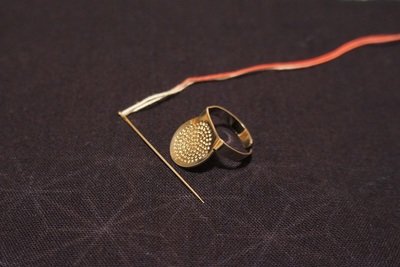
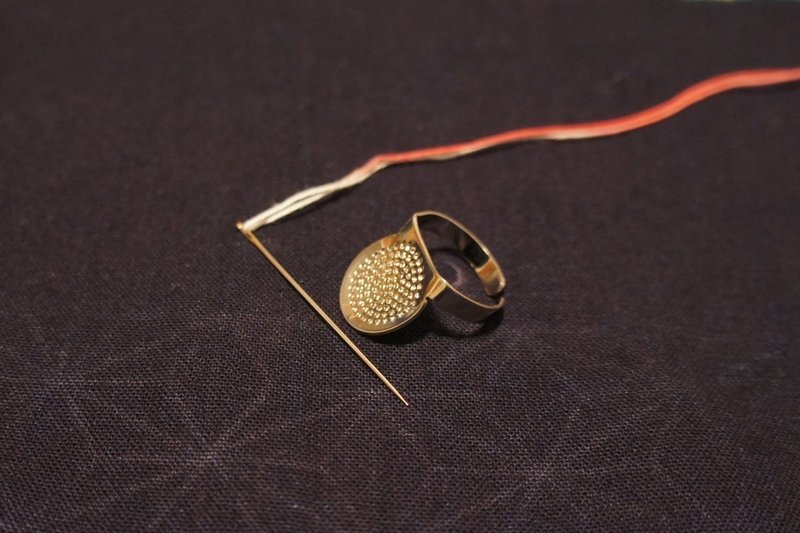
The reason is the speed of Sashiko stitching you can learn from us. In order to make many Sashiko project, stitching one stitch by one stitch will not be good enough. We would need to make 10 to 30 stitches by one pushing. It is difficult to explain in the text. I upload some video to explain better. And the best way to learn how to use thimble and needle to speed up your stitching is to learn it by professionals in the hands-on workshops, face to face.
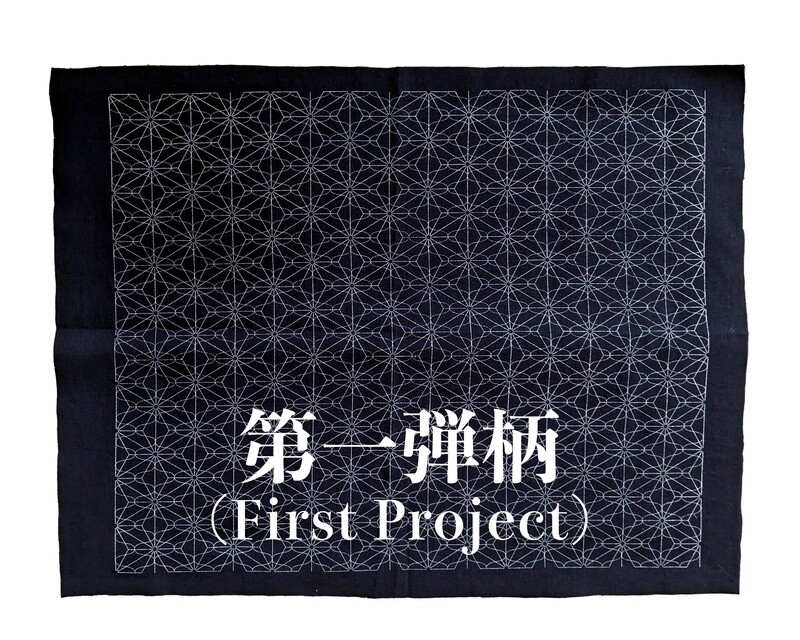
Take a look at this photo.
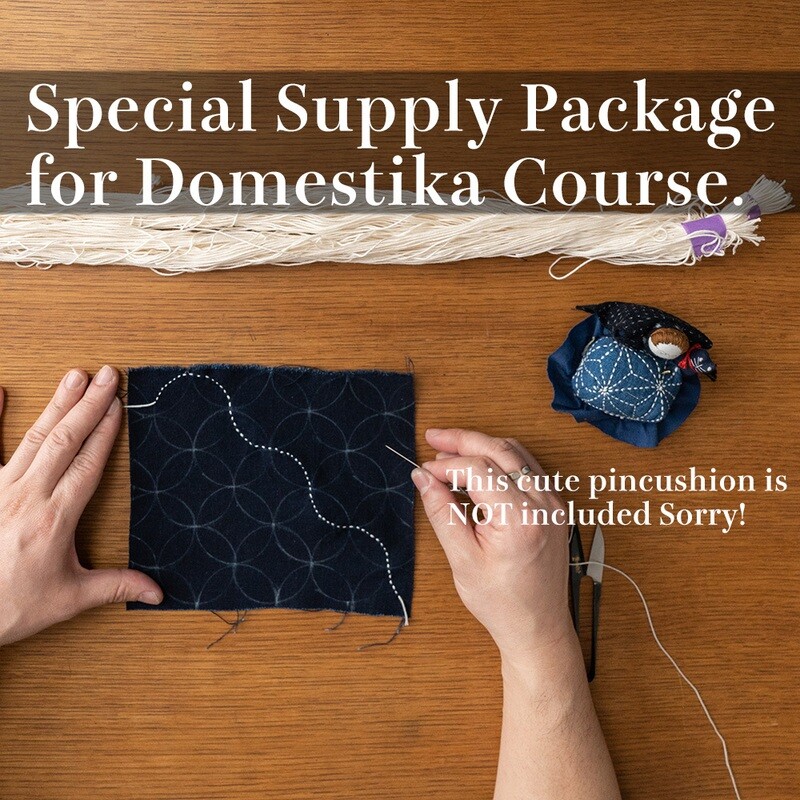
It is an example of workshop materials I offer in our Sashiko workshops. The fabric size is about the US Letter size. I have a question for you.
“How many hours would you need to make this pattern stitched?”
In order to keep Sashiko business alive in the market, we would need to complete the Sashiko within an hour. We cannot spend more than 3 hours on this stitching when we make the product. Otherwise, one Sashiko piece becomes $100 of worth and even more like $10,000 if the piece is big. When a person do Sashiko stitch by stitch, it would take more than 3 hours for sure. By learning how to use the thimble and needle, when you learned it and got used to the tequnique, you would be able to finish this pattern within 3 hours. The faster you can stitch, the more project you can enjoy. The more project you enjoy, the better your Sashiko stitching will be. In order to have the beautiful result in Sashiko, the even stitches are the key. By doing more Sashiko project, you would have more even stitches.
In summary, by learning Sashiko from professionals, you would learn how to make Sashiko stitching much faster, and in result, it will be much better stitching.
Although I have other small reasons why learning Sashiko from professional is beneficial, the main reason is the speed based on the technique how to use thimble and needle. I plan to upload more videos regarding Sashiko stitching, but the best and the most efficient way is to participate the workshop. You would get the follow-up support from me after meeting me in the workshop as well.
We have Sashiko workshop coming up on 6/24 and 6/25 in 2017, in West Village, NYC, the lower manhattan. I hope to meet anyone who is interested in Sashiko. I will show you, in person, how to do Sashiko and you will see why learning Sashiko professionals is beneficial. We will not disappoint you with the 3 hours/ $135 fee.
I enjoy hearing from Sashiko Workshop participants after they finish their project at home. A Sashiko Workshop Graduate makes very beautiful Sashiko pieces. Today, let me introduce a beautiful Sashiko patched Jacket from a student who overcame the challenge of learning how to do Sashiko stitching.
Beautiful Patches by Sashiko Workshop Graduate makes
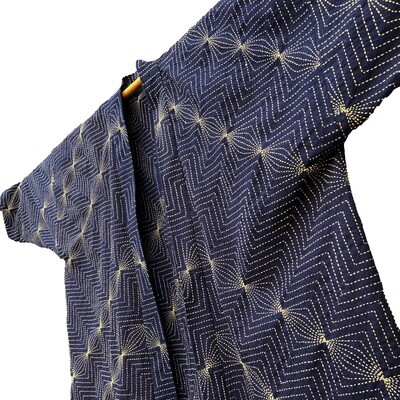
A workshop graduate patched a vintage Jacket with Japanese vintage fabric with Sashiko stitching. The patching and stitching make it “one-of-a-kind” jacket. It is so unique and exclusive. This jacket could be displayed on the shelf of fashion store, I believe. I am so proud of her continuing her stitching experience.
I do not teach how to make patches in the workshop, but the basic Sashiko stitching technique can be very useful in your stitching project.
Our Sashiko Workshop will give you more possibility
In 3 hours basic Sashiko workshop, I focus on sharing how to use the Sashiko Thimble and long Sashiko needles. By learning the method, you will experience the “speed” of Sashiko stitching. The faster your stitching goes, the more project you can make. It is the first step to makes “more” to have “better” result. Only practice makes it perfect.
Learning the new method can be challenging to many people, especially those who have previous stitching experience. However, I will not give up teaching you unless you decide not to follow the technique we use.
*Please be advised that the method we use it NOT the universally “right” method. We established the stitching techniques and follow it since we believe this is the most productive and efficient. There is no need to follow it. It is up to you. Our goal is to share the Sashiko stitching to the world.
I hope you can join our team to enjoy Sashiko more by stitching more!
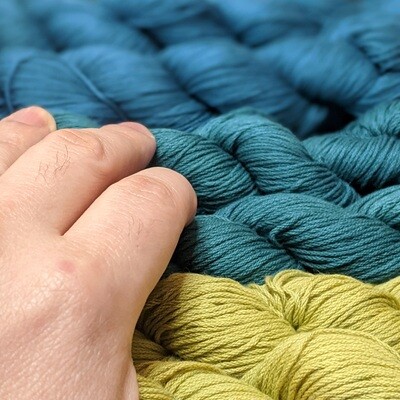
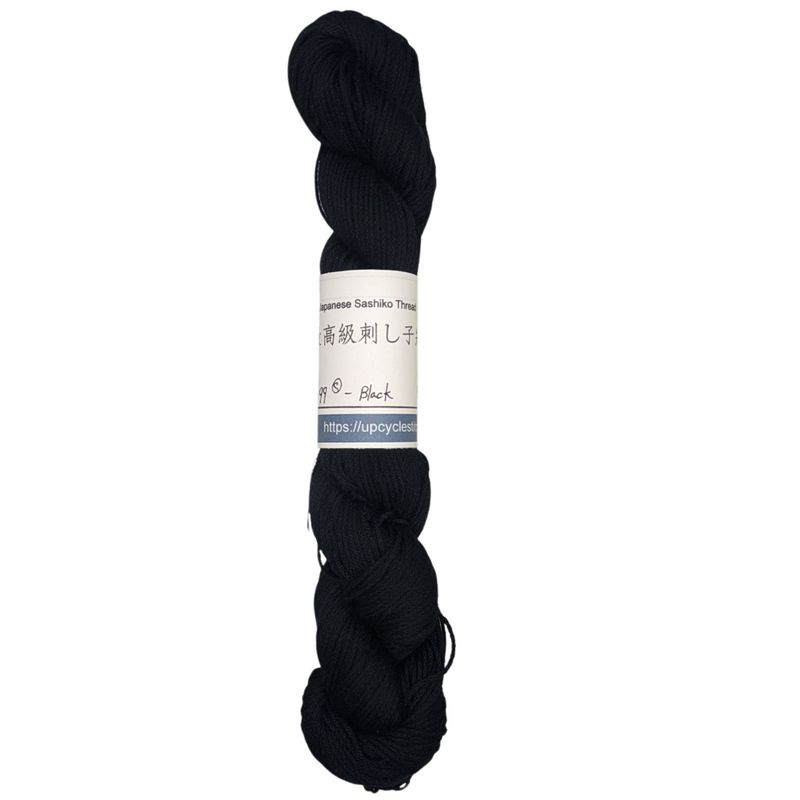
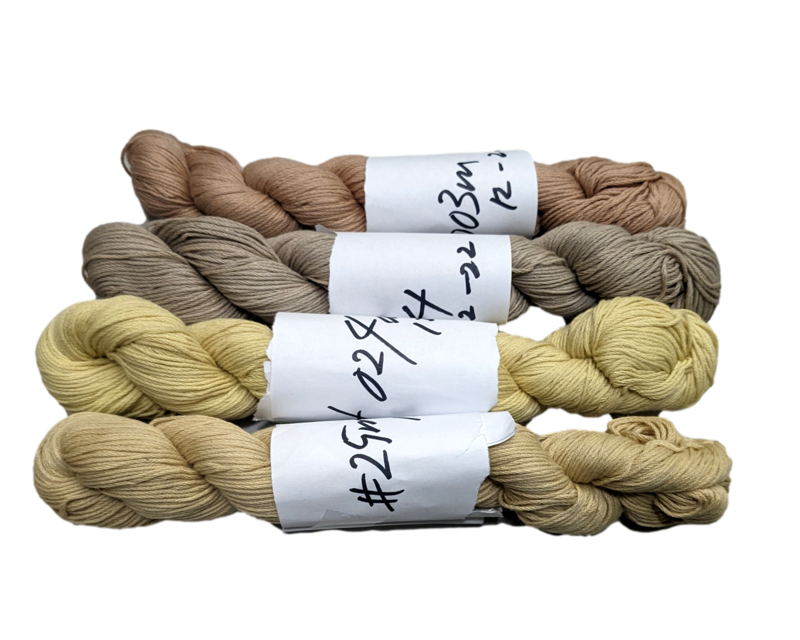
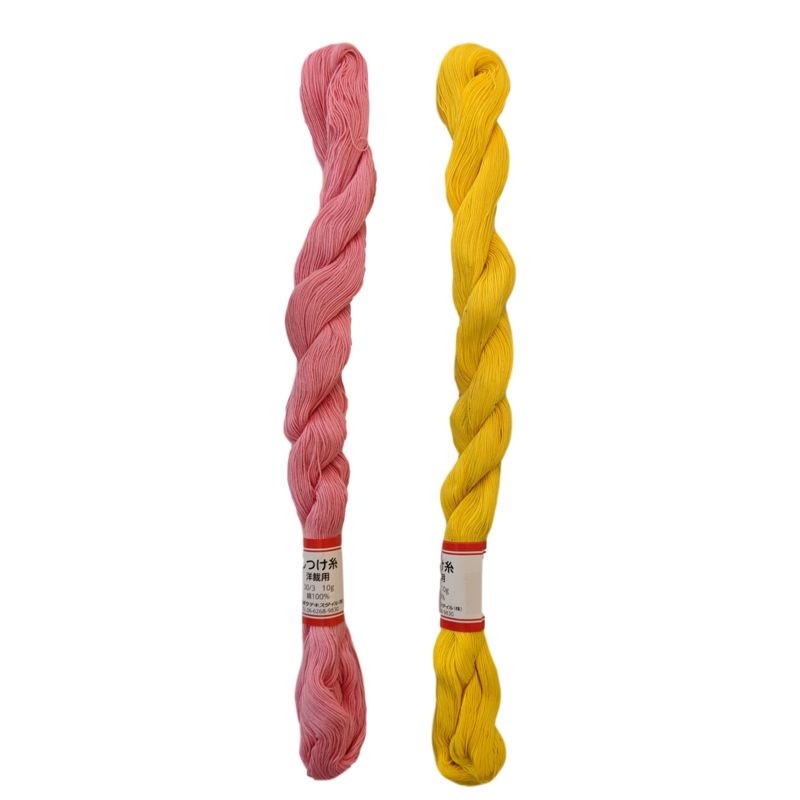
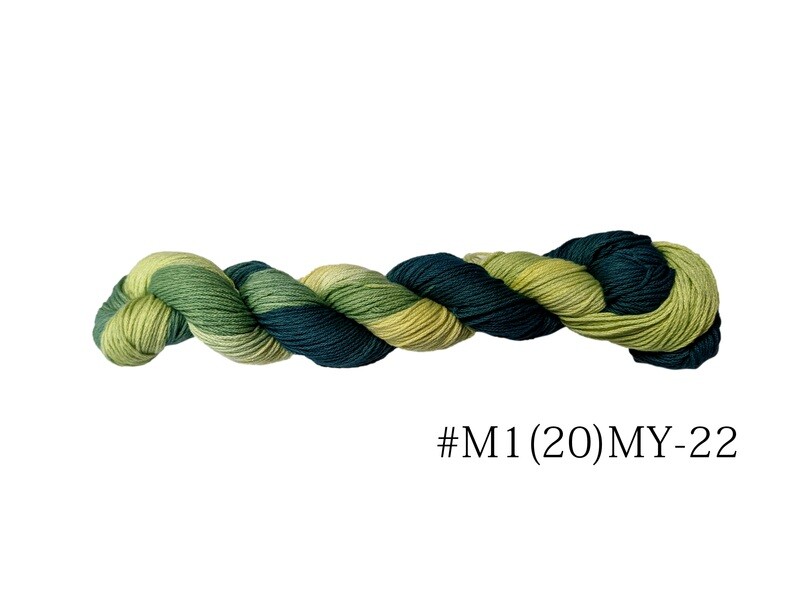
Upcycle Stitches LLC is an official distributors of Coron Sashiko Thread in the United States. Sashi.Co & Keiko Futatsuya has a good partnership with Coron manufacture and Keiko obtain the permission to distribute their thread in the United States for us. As of Spring 2021, we are not looking for the wholesale option with distributors due to the limited amount of production. However, some bulk discount may be available when you would like to purchase more than 20 skeins. Please contact Atsushi for the details.
*[Update in 2022] We are notified that there are similar Sashiko thread with similar name (Coron) available in the market. I have not confirmed if they are the identical thread to the one we use. In order to fully enjoy the purpose of Sashiko Thread, please purchase them from one of our web platforms. Thank you.
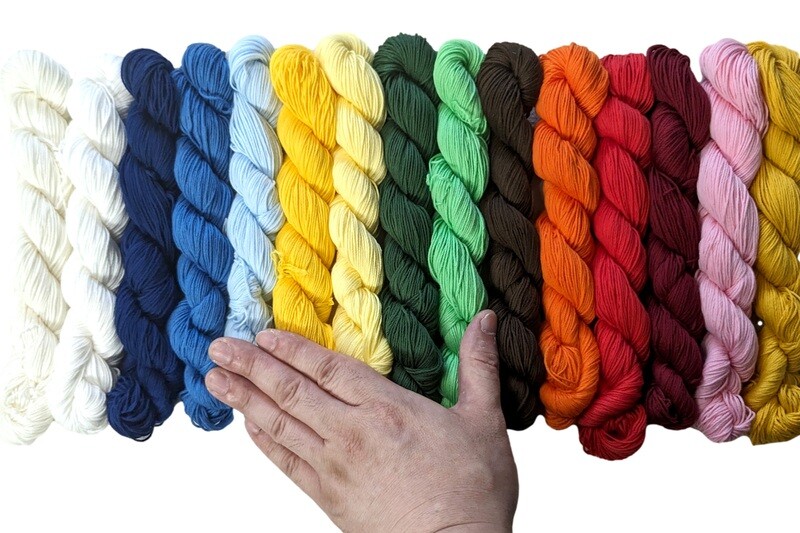
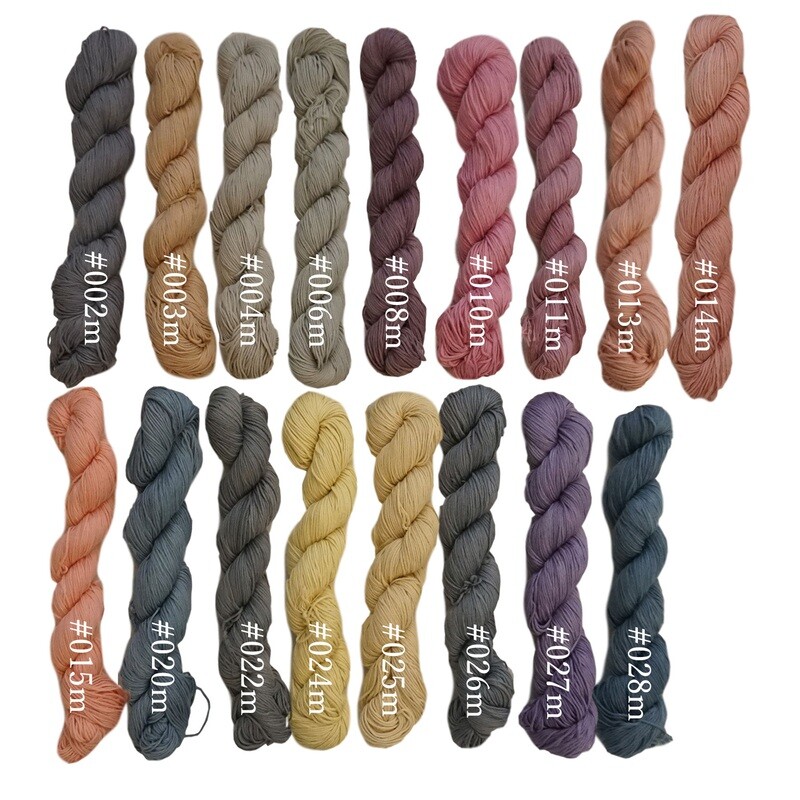
Because of our business size, we do not have a large inventory. Therefore, from time to time, the threads get sold out. Especially these colors of #10 and #15 are very popular, and they may be sold out. In a case of unavailability due to inventory, please contact us for open-order. We will make sure that you would get as soon as possible without extra fees. Waiting time will not exceed 2 weeks after receiving the open order.
Coron Sashiko Thread is one of the best Sashiko thread.
We have been so many years of relationship with Coron Thread Manufacture Company. We sincerely believe their thread is one of the best thread available in the market. They are made in Japan and made from Egyptian Cotton 100%. They aren’t the cheapest option, but the price is reasonable considering the length of thread (145-meters) and the quality. In fact, it is the best option to get the better Sashiko result. I always use Coron Sashiko Thread and merely use the other brand thread.
I hope you find these thread appropriate (the best) to your Sashiko project.
Keiko Futatsuya is a founder of Sashi.Co & Keiko Futatsuya and a Sashiko artist herself. What makes her so special is her Sashiko designing sense. She always surprises me with her new Sashiko design. I believe she is a type of genius in Sashiko designing.
30+ years of Sashiko experience
Keiko studied a dressmaking in vocational school after she had graduated high-school. When she was in early 20’s, she married to Yuichi Futatsuya, who was the second generation of Sashiko business. First, she wasn’t allowed to make Sashiko art pieces for sale since she was an outsider and didn’t share the traditions. However, regardless of strict restriction, she learned how to stitch from other Sashiko artisans and enjoyed the beauty of Sashiko. Even when her products didn’t line up on the store shelve, she kept making Sashiko art. It is simply because she liked Sashiko.
After so many years of Sashiko experience, Yuichi and I decided to shift the Sashiko business from “making many small products as craft” to “making one-of-a-kind art.” In the process of making one of a kind art, Keiko’s sense of Sashiko designing finally got a spotlight.
It isn’t easy to anticipate the result in Sashiko
In terms of Sashiko stitching, she doesn’t have the best skill. Although her Sashiko technique is sufficient to call her artist, her significance is to anticipate the result in Sashiko and Vintage Fabric combination. For example, a woman in her 70’s, who is also a part of Keiko’s Sashi.Co team, has the supreme Sashiko technique. Her hands move like a machine and Keiko strongly depends on her skill. However, the supreme Sashiko technique doesn’t connect to the ability to make a beautiful Jacket.
*Sashi.Co & Keiko Futatsuya is a group of Sashiko artisans. Not all the Sashiko stitchings are done by Keiko, but everything is supervised by Keiko.
Keiko’s basic knowledge of dressmaking, her 30 years of observing and enjoying Sashiko, and her design sense make this completely exclusive collection possible.
It isn’t easy to anticipate the result of Sashiko product. It may look on a paper, on a computer screen, or even on a process of matching the fabric and thread. However, the result can be very different from what we imagined after stitching Sashiko on the actual fabric. It is the beauty of hand-making art.
Things Only Keiko Futatsuya can do
In addition to her Sashiko designing sense, she has a great technique to repair the BORO.
The 2 photos below is the Boro of before and after. In order to complete this challenging repair project, the artist has to have an understanding of the vintage fabric, good Sashiko techniques, and the sense of matching all the vintage fabrics. By looking at these results, I cannot change my mind that she is the genius in Sashiko stitching and Boro repairing.
Keiko Futatsuya is a supervisor of Upcycle Stitches LLC operation regarding Sashiko such as workshops, tutorials, and articles. If you have any questions about her, please contact us. She doesn’t speak English, but I am happy to translate your question and ask her on behalf of you. Please be advised that the question and answer may be shared on this website after getting the permision.
Hello. My name is Atsushi Futatsuya. In the USA, I often introduce myself “Azu” as my nickname. It is an honor to share what Sashiko is based on my life-long experience.
Meet Atsushi Futatsuya on Youtube
It is much easier to know who I am by watching me talking. Please check what I would like to share about Sashiko on the Youtube Channel.
Atsushi Futatsuya offered Sashiko Workshop mainly in East Coast of the USA, NYC and Brooklyn Aream before Covid. (Atsushi lives in Central PA – Zip 17837, 4 hours driving from NYC). In order to learn Sashiko from him, attending a in-person workshop is the best way. Alternatively, the Online Sashiko Class is available for those who wish to learn without traveling.
Sashiko Workshop Update in Covid-19
Under the pandemic of Covid-19, in order to secure everyone’s safety, all of the In-person Sashiko Workshop has been cancelled for 2020. Instead, I had spend as much effort as possible for developing the better Online Sashiko Class. After sharing the Online Sashiko Class with more than 50 students (who are now my friends), I believe I can deliver the same contents via Online. Please check our Online Sashiko Class.
Let me please introduce myself to share why I am running this website to share what Japanese Sashiko is.
I was born in Sashiko Family
Did you have a “planned future” in your childhood, that your family kept mentioning?
I was born in a surviving Sashiko Family in Gifu prefecture, Japan. In my childhood, my friends were Sashiko artisans who worked in our family business. There was a pile of fabric, scary numbers of needles and thimbles, and so many colored threads. I strongly remember many people told me that I will take over the business when I get older. It was the Japanese tradition for the first-born child to take over the family business, especially in the traditional crafting family.
And, of course, I hated my fate.
Regardless of my Sashiko techniques I naturally learned, I purely didn’t want to be in the Sashiko business in my adolescence. It wasn’t easy to get out of the rails many people prepared, so I decided to get out from the country. I decided to go to the university in the States.
Sashiko Business to Sashiko life-style
After I had graduated from the university, I started working in Tokyo. I still didn’t want to take over Sashiko business. My parents were still 50’s, and I thought I could avoid a serious conversation about who would be responsible to the family business later on.
However, in 2008, my father called me if I could help him to run the business. The business went into a bad debt, and they could use some help from financial aspects. After deep consideration, I decided to go back to the family business mentioning that I am only doing so to “help,” not “take over.”
Sashiko as Business is very difficult to operate
After I spend some weeks checking the financial sheets, I realize that the Sashiko as a business could be very difficult to operate. In Sashiko, almost everything is hand-made. The keywords for business models of ordinary manufacture industry such as productivity, cost reduction planning, just-in-time system, and a lot more didn’t apply. I tried to understand the reason of debt. After all, recalculating all the possible cost, even if they are all done by hand and unique by one, helped to figure the “right” price. After two years of looking Sashiko with numbers, the company could avoid the bankruptcy. However, I couldn’t see the future. I didn’t find the possibility of growth.
Share what we are proud of
In 2010, I changed my mindset. Instead of focusing on growth, I started planning on “soft landing” of the business. It is almost impossible to make a fortune of money. However, I thought, it may be possible to “soft-land” the business so everyone can avoid the miserable bankruptcy. At that point, my mind shifted from numbers to what Sashiko actually is. I realize the beauty of Sashiko. It is the time I start trying to repair my denim jeans.
Around this time, I started introducing Sashiko in English. Then, I had opportunities to perform workshops in the Netherlands.
Why am I doing this?
As much as I enjoyed introducing Sashiko, the beautiful culture we were proud of, I started to wonder if why I was doing this besides the fact I was born in the family. I couldn’t find the purpose of sharing Sashiko, especially after I realize that Sashiko as a business may discontinue after elderly artisans stopped working for us. I coulnd’t reason myself to continue Sashiko business with sacrifice my days in 20’s.
Then, the Tohoku Earthquake occurred in 2011.
By supporting Tohoku throughout Sashiko, I realize the meaning of continuing Sashiko culture, to pass down the culture to the next generation.
After my father had passed away
In 2013, on October, my father had passed away unexpectedly.
Although my mind wasn’t ready to take over the business without my father, I had a determination that I was the one to take over his will to the company. I didn’t hate the fate I had as Sashiko Business Manager.
Long story short, life is full of dramas, my mother and I were fired by the new stakeholders who found out that the company had some cash. We knew the reason for this inhuman action. My mother and I were troublesome to deal with. We didn’t care about the short-term profit. We focused on how to continue the culture in form of a business entity. In 2013, I lost the identity as Atsushi Futatsuya as Sashiko business manager.
Upcycle & Sashiko Culture as Atsushi Futatsuya
After the unbelievable moment that our life changed, I decided to move to the United States. It was just too painful to stay in Japan. I told my mother that she could come with me, but she decided to stay in Japan. She had many friends, her precious dog, and my brother who just jumped into the society. She couldn’t just leave things behind. As much as I worried about her, we decided to start our new life without Sashiko.
Sashi.Co & Keiko Futatsuya started in 2015
About June in 2014, my mother called me with a serious voice, saying “I would like to do Sashiko…”
She loves Sashiko. She couldn’t live without it. She could enjoy just stitching, but she also wanted to make big pieces and entertain people who love Sashiko. She asked me if I could help her to make her Sashiko as a business again. Although I was expecting to be a stay at home dad in the coming year, I agreed to help her to be Sashiko business owner. Then, she started the project called, Sashi.Co & Keiko Futatsuya ~ Designing a life with Sashiko ~ with many helps around her.
What can I do as Atsushi Futatsuya?
Sashi.Co & Keiko Futatsuya is getting bigger, and my mother enjoys her projects more and more. She provides beautiful Sashiko fabric to a fashion brand, she repairs the most beautiful vintage fabrics for a fashion designer as “To-Be-Boro”, and she makes great Sashiko pieces with her friends. Her income itself isn’t enough to support her days yet, but her enjoyment is what I value the most.
In 2017, I established a company called Upcycle Stitches LLC. This website is the company’s website.
I host Sashiko workshops. I provide Sashiko supplies and materials with sharing Sashiko techniques and skills. Based on my experience, it is my time to think what I can do as Atsushi Futatsuya, not as the 3rd generation of Sashiko business family.
It is our new journey to embrace Sashiko. My mission is to share what Sashiko is, to the world. Again, Hello world. This is Atsushi Futatsuya. I am a Sashiko Artisan and Curator of Sashiko Story.
Support Atsushi & Keiko’s Activity
In 2019, I learned that there is a platform to support the artisans/story-teller. It is called “Patreon”. We made a platform mainly to support Keiko, and I share many Sashiko stories on there (As of November 2020, I have about 100 stories to read). Those stories are not about “How-to do Sashiko”, but more like “What is Sashiko in the Japanese culture”. I have many more stories to share to the world. Your suppport is very much appreciate for us to continue our activity.
We have been practicing Sashiko stitching for more than 30 years. The founder of Sashi.Co, Keiko Futatsuya, has 33 years of Sashiko experience and some of her friends (Sashi.Co member) have even more years of experience. I have about 8 years of experience. Well, I was born in Sashiko family, so I started holding a needle when I was a child to “practice” Sashiko. In these years, we accomplished many Sashiko projects and created many Sashiko Stitched Fabric.
A size of big enough to keep Sashiko stitched fabric
Let’s say, in order to make a jacket, we first trim the fabric and stitch Sashiko. Then, we cut the fabric based on the dress pattern (jacket pattern) to tailor them. In the process of tailoring, we have some leftovers. Leftovers are as valuable as the fabric we used for the project, so we do not throw them away. We keep it for the next project. The Japanese in past used to say, “if we have a size of fabric, large enough to wrap three soybeans, we would keep it.” In current society, the small fabric (or fragment) may not be as useful as before. Well, however, we kind of keep them anyway. We are proud of following the tradition and respecting the concept of ancestors although we may be just a type of hoarders.
We kept a pile of good Sashiko stitched fabric. Most of them are the type of vintage fabrics.
When we started to share the Sashiko technique, culture and mindset, we decided to provide this valuable fabric to someone who can share and appreciate the same concepts. Finally, I got enough time to introduce one by one, arranging a small pile of Sashiko stitched fabric.
Here is a list of articles about Sashiko stitched fabric available online.
Since most of the items is one of a kind product, we listed them on Etsy store. You can view them on our Etsy store, too.
I love these Sashiko stitched fabrics since they are the best material for mending project. The vintage fabric with strengthing by Sashiko is always a good idea to repair my garment beautifully. I hope you would be able to find your favorite fabric for your favorite fashion item.
Also, our customer shared a nice idea of its usage.
After trimming the edge of the fabric, then put it in a frame. It would be a nice wall decoration. It could be a part of quilting or/and patchworking project.
If you have done any Sashiko project by using our Sashiko Stitched fabric, please share your idea with us. I would love to introduce it on this website. People would love your work and ideas!
Upcycle Stitches / Sashi.Co & Keiko Futatsuya are a group of Sashiko artisans and craftspersons. Usually, we have a plan in our mind when we start a Sashiko project. The purpose of Sashiko stitching can be making a Sashiko Jacket from Japanese vintage fabric. Or, it could be preparing a piece of fabric with Sashiko for the Jeans mending project. Meanwhile, we just enjoy the Sashiko stitching itself without having a purpose. From time to time, we pile these Sashiko Swatches which we enjoyed and the piece of fabric which we didn’t use in the big project. We decided to sort our inventory (pile) and sell them as the “one-of-the-kind” Sashiko Swatches.
We enjoyed. Please use them for your Sashiko project.
Every Sashiko swatches are, of course, hand-stitched by a member in either Upcycle Stitches or Sashi.Co & Keiko Futatsuya. Most of the fabric is Japanese vintage fabric, and Indigo dyed. Otherwise, I will specify the materials and dye methods. Please be advised that sometime we forget how we obtained the fabric. When you see the comment of “no proof,” it means “our best guess.”
It would be very wonderful materials/supply for your Sashiko project, especially for mending or repairing project.
As of now, the Sashiko swatches are available on our Etsy website. They are one of the kind products. Once it is sold, we won’t be able to make the same swatches.
I hope you can use these beautiful Sashiko swatches for your long-appreciating Sashiko project. These are strong fabrics because of Sashiko. These are beautiful fabrics because of time (vintage). By using this fabric, you step forward to make BOROs in future.
Keiko Futatsuya, my mother / a Sashiko Artisan in Japan, visited an unbelievable place regarding a hidden Sashiko/Boro culture – Tokiyama Sashiko (時山さしこ). In a very small village called Tokiyama, where there are no grocery stores around, the people discovered their own Sashiko culture in 1990’s from the ground. The seniors tried to hide their Boro by burying them. A few generations later, the people there found out the culture, and dig out the Boro from Ground.
The people in Tokiyama tried to pass the culture down to the next generation by exhibiting Sashiko/Boro pieces and sharing Sashiko workshops in their small exhibit room.
The people (Sashiko practitioners in Tokiyama) knew about Keiko from her previous work as the designer in Hida Sashiko. They warmly welcomed her and share their story with her and her friends.
Yes. I mention it right. Discovered Boro from Ground
We, who live in the 21st century, value BOROs as a beautiful art piece. Patches and repeated stitching make unique “Visual Art” like abstract drawing or mosiac art. In the past, a few hundred years ago, the Japanese had completely different feeling toward Boro in comparison to the value we have today. The feeling was opposite side of the beautiful & luxery item. It was the shame. Regardless of its beauty, the BOROs were the symbol of Shame for them who lived in Japan for that time.
In Tokiyama village, Sashiko repaired Jacket probably represented how bad “poverty” there were. People considered the more a family possesses Boros (or Jacket/pants with mending), they considered the poor the families were. They felt ashamed of wearing Boros and repaired Sashiko jacket, which they didn’t have any choice not to do. When they had a pile of Boros and mended clothes which they couldn’t repair much any longer, they bury Boros in the ground to hide the shame they held.
In 1990’s, people learned that there was a Sashiko culture in Tokiyama hundreds of years ago from that time. They dug the BOROs and Sashiko jacket from the ground. Indeed. They found Boro from Ground. Some of them transformed its touch, the cotton became like a felt after getting the pressures under the ground.
Unbelievable Testimony of Sashiko by Tokiyama Sashiko
Sashiko formed its culture in many places in Japan. Many places where are rural places with a lot of snow and severe winter had the similar culture (probably named similarly to Sashiko). In these places, they developed their own Sashiko culture where Sashiko was a work for women to repair men’s jacket. Regardless of the numbers of culture’s footprints, it has been very challenging to make a research about Sashiko. We know that they existed. However, as the people in Tokiyama buried their pieces, many Japanese tried to “hide” the fact so that they thought they wouldn’t pass down the poverty to their precious children.
Tokiyama Sashiko gave us a hint of understanding the difficulty of discovering the Sashiko history. People felt ashamed of having the Boro and heavily pactched Sashiko Jackets. This great opportunity with Tokiyama Sashiko opened up the possibility to learn more about Sashiko.
We will visit them again, ask questions, and try to pass “Sashiko” down to the next generation together, without burying them in the ground.
Sashiko Dish Towel with using Sarashi Cotton Fabric is one of the most popular items in Sashiko stitching. There are many kinds of dish towels with Sashiko. If you are interested, google the keyword of “Sashiko Fukin“ and execute the online research. You will find many beautiful dish towels with Sashiko. Many books with Sashiko Dish Towels are published in Japanese as well.
Why Dish Towel with Sashiko stitching?
In past, Sarashi Cotton Fabric was relatively easy to get. The Japanese layered the Sarashi fabric and made dish towels for their everyday needs. It was an era people couldn’t waste anything. Of course, there were no paper towels. They tried to strengthen the fabric so they can use the towels repeatedly. They used the towel to wipe the dishes after rinsing. When the towel gets a bit dirty, they used it for wiping the table and other furniture. When the towel started torn or looks filthy, they used the towel to clean the floor. After these process, when the towel looks completely dirty, then they used it for cleaning toilets. I believe it is another form of Boro (if we can find the filthy dirty dish towel after they cleaned their toilet.)
In the process of shifting purpose for Sarashi towel, Sashiko always stayed there. Sashiko not only repair the fabric but it also strengthens the fabric.
Sarashi fabric absorbs water very efficiently. It is easy to clean. Therefore, the Japanese used the fabric for daily needs with Sashiko stitching.
Good practice fabric for simple running stitches and overlay stitching
In modern society, the needs for using a towel so many times repeatedly declined. Paper towels are so easy to use. (although we use the Sashiko Dish Towel in our days.) In our experience of producing Sashiko products, we realized that Sarashi fabric is very easy to stitch, soft to hold and loosen enough t0 practice the overlay stitching.
Sashiko with Dish Clothes is a form of culture because of reasons.
When you want to experience Sashiko in the traditional way, considering to make dish towel is a good option to enjoy Sashiko more.
We prepare the sample set to make Sashiko Dish Towel
I wanted to make it simple. I just wanted you to try the quality of Sarashi fabric and the fun of stitching.
We prepare a set of
A dish towel size of Sarashi Fabric (the edge trimmed for less trouble)
A small skein of Sashiko thread
A Sashiko needle
No need to follow our Sashiko techniques to use a unique Sashiko thimble or worried about making overlay stitching. If you could just enjoy the stitching and get interested in Sashiko, that is our pleasure.
The set is available on this website as well as our Etsy Store.