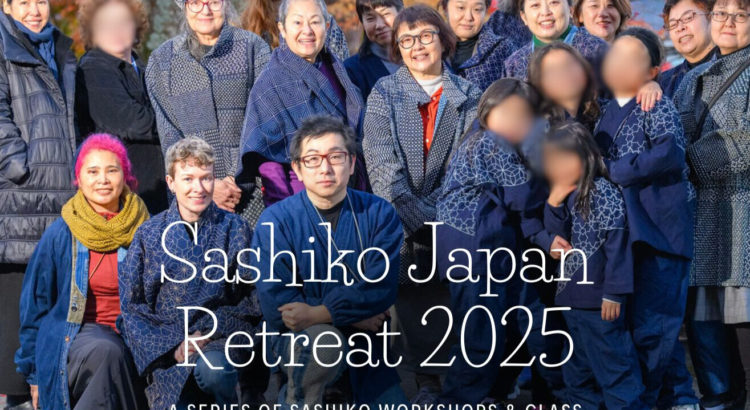
Since the first time I organized the Sashiko Tour to Japan in 2023, it has been my greatest joy to guide my “Sashiko Friends in the World” to meet my “Sashiko Friends in Japan.” Over time, I changed the name from “Tour” to “Sashiko Japan Retreat,” as I realized the word “Retreat” best captures what I truly want to offer.
*If you wish to join, please fill out the Google Form here. It is available on the website above, too.
This retreat is not a sightseeing tour. It is a series of workshops and gatherings that allow participants to meet previously “unknown” Sashiko artisans in Japan, experience the Sashiko they practice, and step into the cultural spaces that usually remain closed to visitors. Such access requires layers of trust. This retreat is possible only because of the long-standing relationships of trust I share with my Sashiko friends in Japan. No tour company or single artisan could make this happen—it is something we can create only as a community of Sashiko practitioners, united by sincerity and authenticity.
Sashiko is more than technique.
And then, what I can teach is just one small part of the whole picture of Sashiko.
Explaining what lies beyond technique—the “more” of Sashiko—is challenging. I could pretend to be a master of all Sashiko, but doing so would betray the trust that sustains our practice. Instead, I invite you to Japan so you may experience that “more” firsthand: the kinds of Sashiko I cannot teach alone, shared by the artisans who continue to live it every day. Over ten days, I will tell stories of my own, and I will translate the stories of my teachers, so that you may hear their voices directly.
If one is truly serious about going deeper into Sashiko—to appreciate what it really is—this is the journey I want you to jump in. Together with my friends, my family, and myself, we will support your path. I often say that the “Core & Essence” workshop opens the door to our Sashiko. A multi-day workshop/retreat then invites you into my space, where I can share all Sashiko that I know. But this Sashiko Retreat goes even further: it opens many other doors—those of my friends, my family, and the wider circle of artisans in Japan. No single person can be “the expert” of the entire picture of Sashiko, but this retreat offers a bridge to meet and experience the diverse realities of Sashiko being practiced in Japan.
In the past, I never advertised these retreats because of the long waiting list. For 2025, however, two seats have unexpectedly opened (due to personal circumstances of the participants who gave up their spots sadly). Those on the waiting list had already made other plans, as I had told them the chances of a seat were slim back in Spring 2025. Many are now preparing instead for 2026 or beyond.
The 2025 Retreat will begin on the morning of Monday, November 17th, and conclude on the morning of Thursday, November 27th. With just three months to go, I hope this message reaches those who feel called to join us for this rare and precious opportunity.
Thank you for taking the time to read this. The detailed outline of the retreat follows below. Please fulfill the Google Form below to notify me either you are ready to join the Sashiko Japan Retreat 2025, or interested in the further Retreat in 2026 and after.
–
*The itinerary below is part of the Sashiko Japan Retreat 2025. Please note that both the contents and schedule are subject to change for the 2026 retreat and beyond.
**Also, please be aware that a 2026 retreat is not guaranteed. The 2025 Sashiko Japan Retreat will take place without question. However, depending on the number of participants, this 2025 retreat may be the last one I can offer for some time. I will never stop offering this experience, but I may need to pause and reorganize my plans and strategy before hosting future retreats.
–
Contents
Heart of Boro – not just a “whatever” patchworking
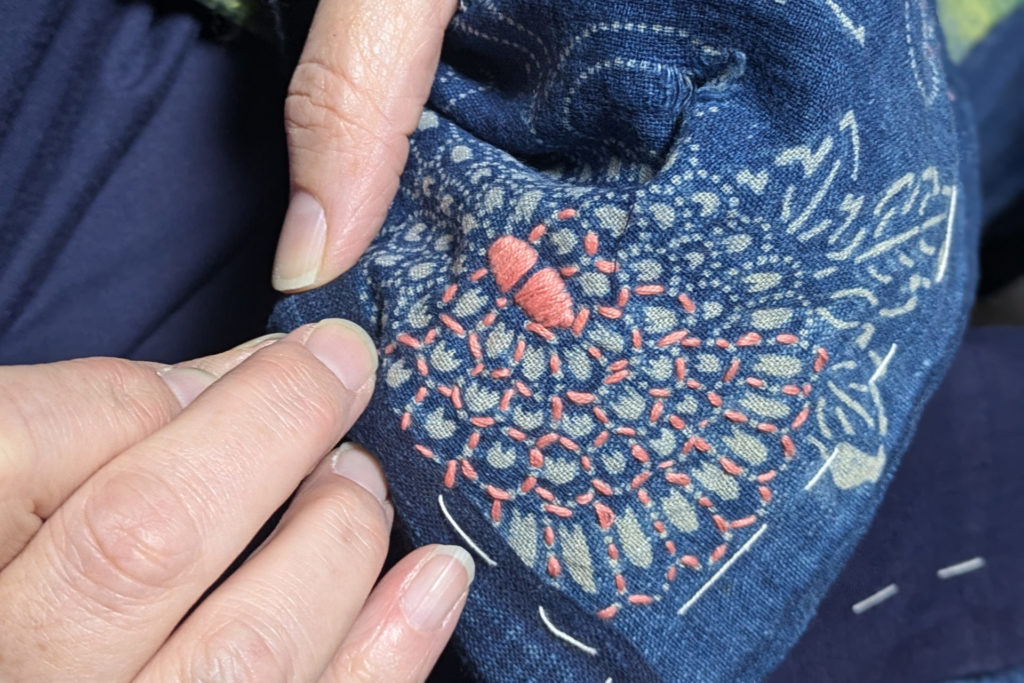
Throughout the Retreat, you will spend a great deal of time with my mother, Keiko. As many of you may already know, she is the creative force behind the Sashiko Story scene. I, of course, enjoy stitching—as you may have seen on YouTube—but without her, many of the most significant Sashiko pieces would never come to life.
Keiko is an artist (although I personally hesitate to call Sashiko “art” just yet). Unlike my structured approach to teaching—designed to help students learn step by step—her way of sharing Sashiko is centered on having fun. This approach assumes a basic foundation of Sashiko and Unshin, which is why my Core & Essence workshop is a prerequisite for joining this Retreat.
One highlight will be a day spent with her remarkable collection of Kofu (Japanese vintage fabrics). Together, we will “play” with these fabrics—stitching and experimenting to experience what I call “Boro To Be” fabric. Boro is not a technique, nor is it simply patchwork done at random. It is a status of fabric: material that has been continuously stitched and used until it embodies the life and stories of its maker and owner. In this workshop, we will bring vintage fabric back to the stage, giving it new purpose and the possibility to become Boro as it is stitched and used again.
There is no right or wrong in Keiko’s Sashiko. What she offers is her wisdom, her experience, and her joy. This one-day workshop will introduce you to the true heart of Boro—something that is often deeply misunderstood in today’s Sashiko world.
Open a door to prepare many geometric pattern for Sashiko
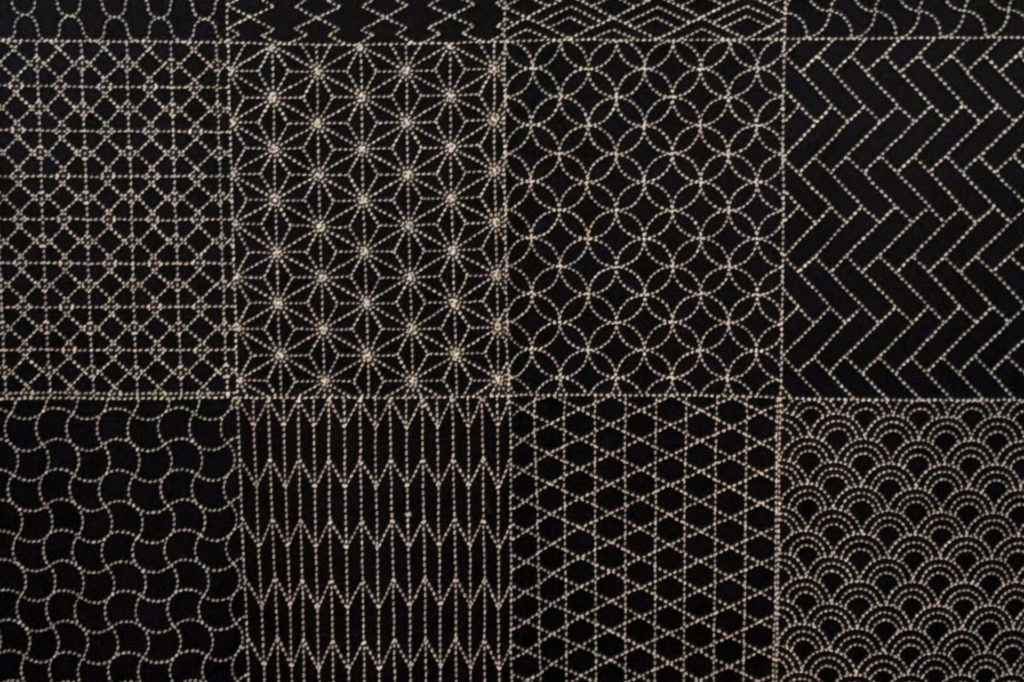
Today, it is easy to find countless Sashiko kits that come with fabric already pre-printed with patterns and even dotted stitch guides. There are also many “Sashiko templates” or stencils available—on Amazon, on Temu, and elsewhere—made by companies who recognize that Sashiko has become a strong enough trend to invest in mass production.
There is nothing inherently wrong with using pre-printed fabric or stencils. They can be convenient, enjoyable, and even inspiring. However, for those who wish to go deeper into the heart of Sashiko, it is essential to learn how to prepare the patterns by hand, as Japanese practitioners did before printing technology and ready-made stencils existed.
During the retreat, we will spend a day with a rising Sashiko artisan who has gained many admirers on Instagram for her beautiful Sashiko—not only the stitching itself, but the entire process. She will teach us how to prepare patterns directly on fabric in the size and form we desire. Following her principles, you will discover how to draw virtually any geometric pattern onto fabric with your own hands.
This will also be a chance to witness the elegance of “beautiful Unshin”—not only the final stitched piece, but the graceful movement of hands, needle, thimble, and fabric working together. Though Sashiko is “just stitching,” the refinement and sophistication of the process are extraordinary.
This day will open the door to becoming a true Sashiko artisan.
For clarity: I would not consider someone an “artisan” if they rely entirely on templates or stencils to prepare their patterns. Of course, one may choose to use them, but if they cannot work without them, it becomes a harmful oversimplification of the culture.
Modern Kogin, and then more Modern Kogin
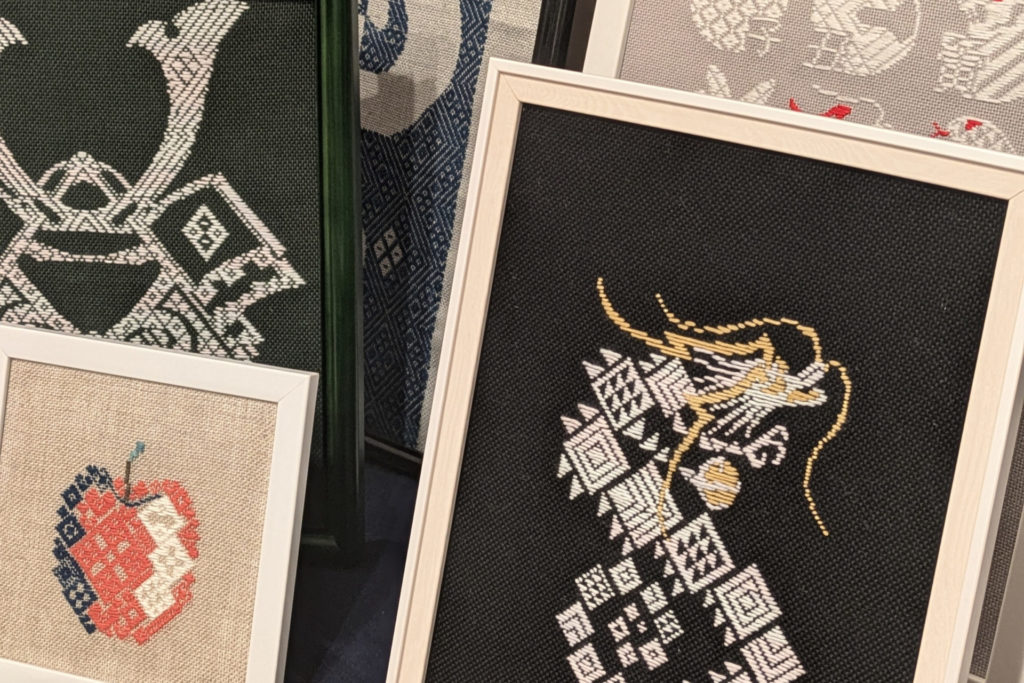
Koginzashi and Hishizashi are an important part of the Sashiko tradition, developed primarily in the northern regions of Japan. Their approaches to stitching are quite different from the Sashiko I practice, shaped by unique geographic, socioeconomic, and historical factors. I am far from being able to call myself a teacher of Kogin or Hishizashi.
During the retreat, we will visit a master of Kogin—especially Modern Kogin—in Tokyo, someone who has dedicated more than half a century to this practice. Under her guidance, we will have the opportunity to learn Koginzashi directly from her experience.
We will then meet another Kogin practitioner who represents a more “modern” interpretation of the tradition. Her work adapts to the needs of today’s society, evolving into a new form of craft that blends elements of the Sashiko I practice with Kogin and Hishizashi.
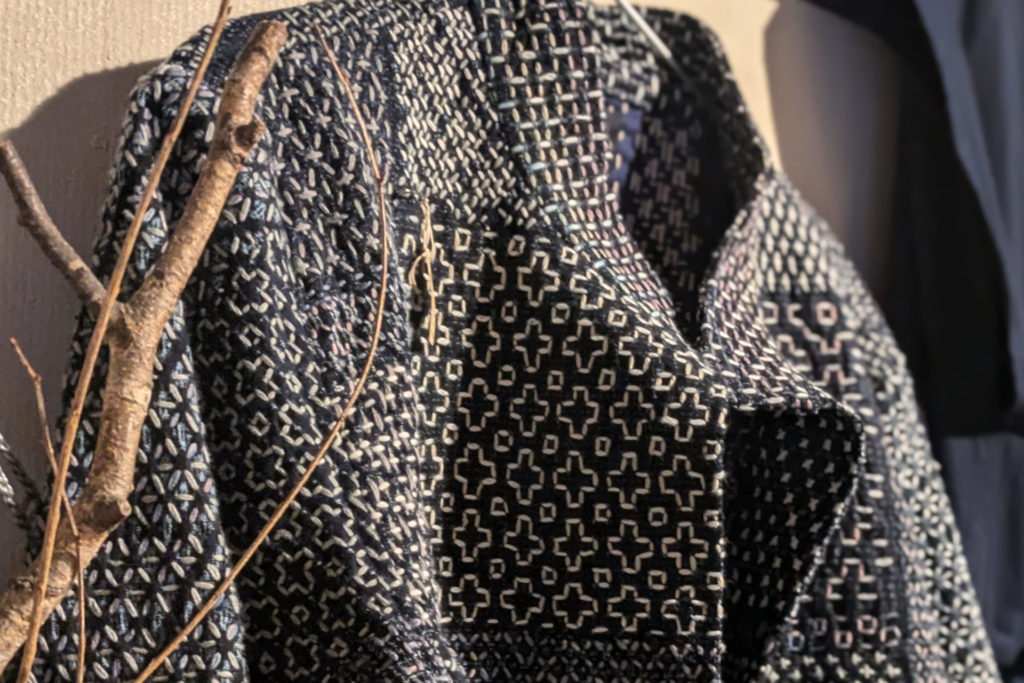
I do not have many words to fully describe this experience, because any description risks being superficial compared to what you will see with your own eyes. The photographs here may give you a glimpse, but the experience you will have in Japan will be far more meaningful than anything I can write.
Cute Sashiko – above what Atsushi can offer
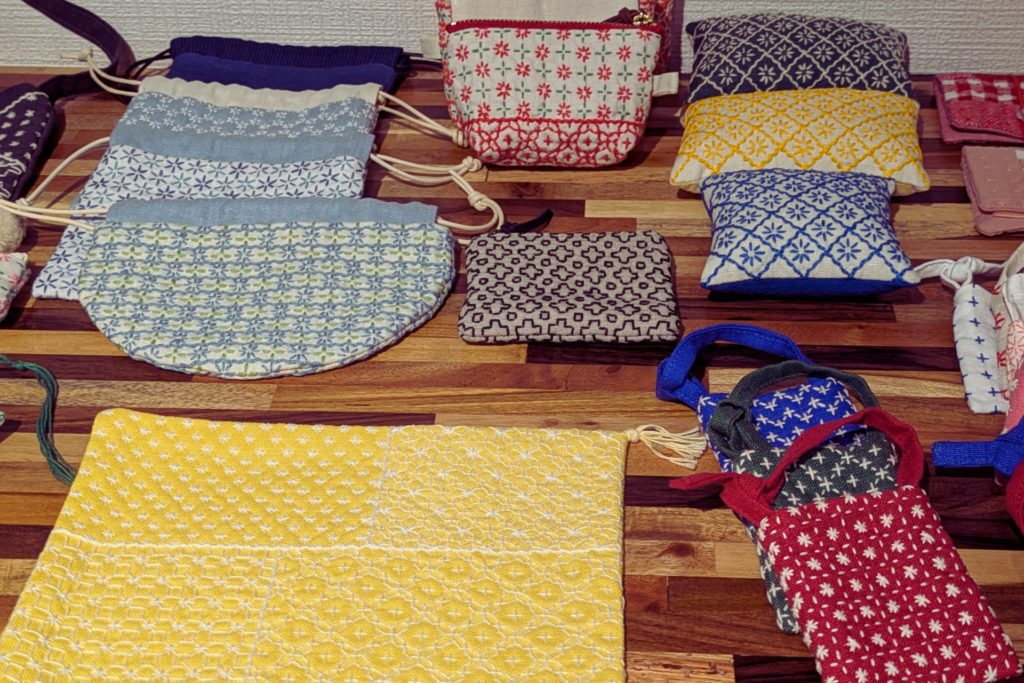
In today’s trend of Sashiko, reflecting modern preferences and needs, we cannot ignore the growing popularity of colorful and playful designs—often expressed through Hitomezashi. This is not my strength, as my own preference is quite fixed—like someone who insists on having only coffee every morning.
Instead of me teaching, we will dedicate a day to learning “Cute & Colorful Sashiko” from a wonderful teacher. Out of respect, I cannot share much information publicly, as this teacher prefers not to be introduced on the internet. However, participants will be pleasantly surprised when they meet her. I am proud to call this artist a “Sashiko friend,” and it is my sincere pleasure to offer a glimpse into the many evolving expressions of Sashiko within Japan today.
From me, you will see the past of Sashiko.
From these teachers, you will create the future of Sashiko.
–
–
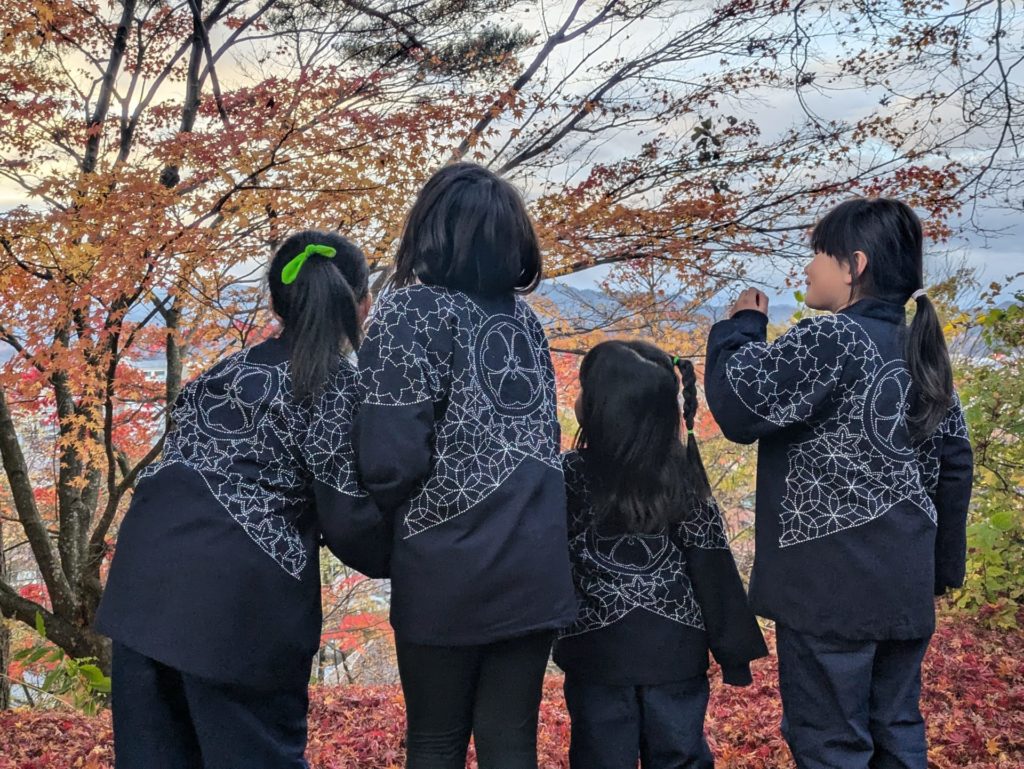
In addition to the workshops, we will stay in unique and memorable hotels, ryokan, and guesthouses that I have researched and enjoyed during previous retreats. These are not the most luxurious accommodations, nor are they impersonal chain hotels with little character. Each place—whether a hotel, ryokan, or Airbnb—has its own personality and charm, adding to the richness of the journey.
I have also put great care into preparing our meals. At each location, we will enjoy some of the finest cuisine available, but more importantly, we will share deeply local meals made possible through the help of our friends. Fine dining can be arranged simply with reservations and budget, but what I hope to offer is something more meaningful—an experience of both elegance and authenticity. We will enjoy both worlds.
And lastly, I will be with you at all times throughout the retreat. You are welcome to ask me anything, at any moment—whether to confirm your Unshin, to hear cultural stories, or even to share something personal. This is my way of inviting you into my own fragile yet important space, where I can share what Sashiko truly means—for me, for us, and for the Japanese people.
This article is just a glimpse into the ten days we will spend together.
I hope it encourages you to step into this rare experience. I look forward to meeting you, seeing you, and sharing time with you.